A couple of weeks ago, I was invited to speak on a panel about education, choices, and the future. The discussion itself lasted about an hour. As always, the most important thoughts came later — after the event, when you start replaying the conversation in your head and thinking of all the things you should have said differently, more clearly, more directly.
So consider this a delayed answer. Or a memo. Something that teachers can share with students, parents with their children, and young people with each other.
It is written mostly for the young, smart, and talented — especially for those who already feel that something is changing, but cannot yet fully name what it is.
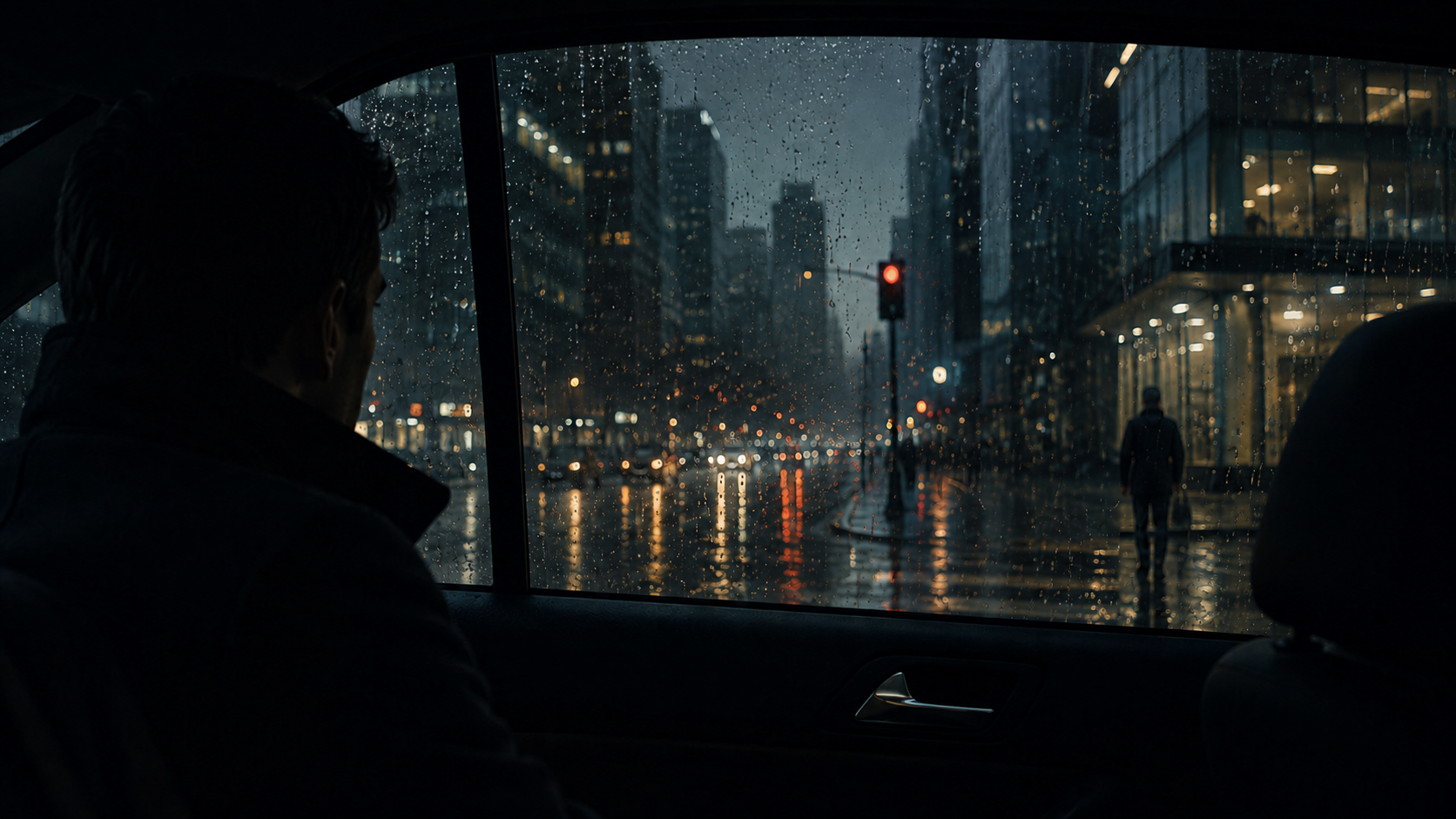
The world is becoming louder, faster, more artificial, and more unstable. A lot has changed, yes — but mostly the lights, bells, interfaces, and decorations. Fundamentally, much less has changed than people think. A human being still needs a strong mind, a trained character, good taste, reliable friends, useful skills, and some kind of inner compass.
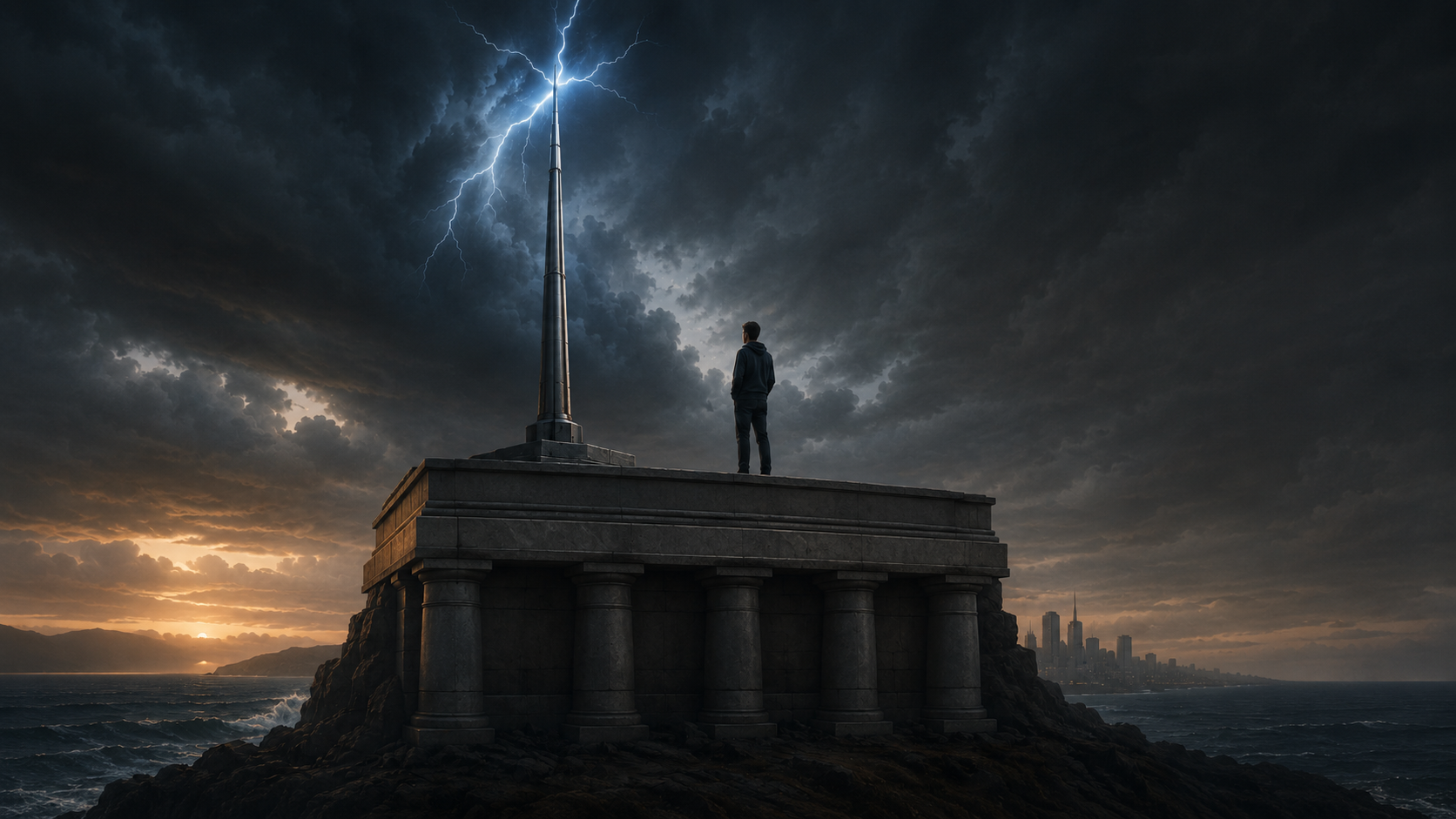
In a thunderstorm, a building survives not because it is fashionable, but because it has a foundation. It needs a solid base, a substructure, and a working lightning rod. The base carries the weight; the lightning rod absorbs the external shock. Education should do both. It should carry you from below and protect you from above. The better your education, the longer you can stand in the storm. And the storm is only beginning.
Now the uncomfortable question: what is a good education?
In the most brutal and practical sense, it means fundamentals. Mathematics. Physics. Chemistry. Biology. Medicine. Engineering. Computer science. Applied physics. The natural sciences and their serious derivatives. These are not just school subjects. They are ways of understanding reality before reality is processed, packaged, branded, and sold back to you as an app, a course, a trend, or a motivational slogan.
Learn these things properly and you will have a chance to build something real. You may also have a chance to become financially independent. Not guaranteed, of course — nothing is guaranteed — but the probability is better. Many other fields are entering a dangerous zone. Not because they are meaningless, but because many of their tasks are becoming easier to imitate, automate, compress, or outsource to systems that produce clean, correct-looking language at industrial speed.
This does not mean that everyone should become an engineer, doctor, programmer, or physicist. That would be primitive advice. But everyone who wants to remain intellectually and economically alive should understand that fundamentals matter more than fashionable credentials. A strong mathematical and scientific base is worth more than a hundred empty management words. Better fundamentals than MBA-flavoured bullshit*.
*Which might be useful, but only after having a solid foundation.
But skills are not enough.
A technically competent person without values is just a better-equipped fool. Or worse — a useful servant for someone else’s system. This is where philosophy enters. And here I have no comforting news. If you want to become a sovereign individual, you need philosophy. Not necessarily as a profession, and not as a performance of intellectual superiority. You do not need to walk around quoting Plato in cafés. But you do need to understand that human beings have been asking serious questions for thousands of years: What is good? What is truth? What is justice? What is freedom? What is a meaningful life? What do we owe to others? How should we live when everything is uncertain?
If someone tells you that philosophy is useless, there are two possibilities. Either they do not understand what they are talking about, or they benefit from you not thinking too deeply.
You do not need to read everything. But you should read some of the best things. Not summaries of summaries. Not algorithmically flattened “key takeaways.” Real works. Difficult works. Works that make you slower, sharper, and less easy to manipulate. Philosophy teaches you that the waters are deep. Literature teaches you that other people are deep. History teaches you that the present is not as original as it thinks. Art teaches your subconscious what beauty, tragedy, proportion, rhythm, tension, and dignity feel like.
This also matters because artificial intelligence is becoming better at producing acceptable formulations. The danger is not that AI will become intelligent in some cinematic sense and suddenly rule over us. The more immediate danger is that people will become satisfied with generated mediocrity. With accurate but castrated formulations. With thoughts that sound complete but have never passed through a living mind.
If you do not develop your own vision, someone else’s system will generate one for you.
So yes, learn mathematics. Learn science. Learn to build. Learn to code. Learn to repair things. Learn to understand how systems work. But also learn to see. Learn to feel. Learn to judge. Learn to distinguish the beautiful from the merely expensive, the true from the merely plausible, the profound from the merely complicated.
And play.
This is underrated. Playing is not the opposite of seriousness. It is one of the deepest forms of learning. Children discover the world by playing with it. Artists create by playing with form. Engineers prototype by playing with constraints. Entrepreneurs experiment by playing with possibilities. A person who cannot play becomes rigid. A person who can only play never becomes serious. You need both.
You also need people.
Network sounds like a cheap LinkedIn word, but friendship is one of the oldest technologies of survival. Find people who make you sharper, braver, kinder, and more alive. Build with them. Argue with them. Help them. Let them help you. Do not confuse social visibility with human connection. The first gives you attention. The second gives you strength.
And then there is time.
This is the part nobody likes to say to young people, because it sounds too heavy. But perhaps young people deserve heavier truths than we usually give them. You will have deadlines, exams, jobs, projects, relationships, family obligations, logistics, weddings, illness, grief, and ordinary fatigue. You will try to stay strong. You will push through. You will lift that mental novelty barbell again and again. And then, at some unexpected moment, it will hit you: this all ends.
Your parents will get older. Your grandparents will disappear. Your friends will change. Some conversations will never happen. Some apologies will come too late. Some good things will be understood only after they are gone.
This is not an argument for despair. It is an argument for wiser choices.
We have enough time — but not enough for everything. So the task is not to live without regret. That is impossible. The task is to regret less. To choose in a way that leaves fewer ruins behind. To work hard, but not become empty. To become competent, but not cynical. To become successful, but not spiritually ridiculous. To love people while they are still here. To do the work while the fire is still there.
Study. Build. Make. Think. Read. Design. Repair. Write. Dance. Argue. Love. Create. Help your friends. Visit your grandmother. Learn physics. Read Dostoevsky. Understand compound interest. Learn how your body works. Learn how propaganda works. Learn how beauty works. Learn how systems fail. Learn how you fail.
And most importantly, do not become the kind of adult you secretly despise.
The future will not be gentle. But that is not necessarily bad news. A storm is dangerous, but it also reveals the quality of the structure. If your foundation is weak, you will be thrown around by every trend, every crisis, every algorithm, every charming idiot with a microphone. If your foundation is strong, you may still suffer — but you will not collapse so easily.
So build the foundation.
And install the lightning rod.